Data Centres Are an Infrastructure Story
For many experienced energy professionals, the words “data centre” can still sound like they belong to the IT industry.
Servers. Software. Networks. Cloud computing.
But behind every data centre is something much more familiar to people who have spent their careers delivering major energy and industrial projects:
Power. Cooling. Mechanical systems. Electrical infrastructure. Controls. Testing. Commissioning. Handover. Operations.
And as investment in artificial intelligence and digital infrastructure accelerates, the scale of the infrastructure required to support it is creating a market that energy professionals should be paying attention to.
The International Energy Agency estimates that electricity consumed by data centres worldwide could rise from around 485 TWh in 2025 to approximately 950 TWh by 2030. Electricity consumption from AI-focused data centres is expected to grow even faster.
Meanwhile, Europe’s data-centre market continues to expand. CBRE expects total European capacity to reach approximately 13 GW by the end of 2026, around 20% higher than in 2025.
For energy professionals, this isn’t simply a technology story.
It’s an infrastructure story.
And that creates an interesting question:
Could the skills you’ve developed in oil & gas, power, renewables or other major projects transfer into the data-centre industry?
For many disciplines, the answer may be yes.
A Data Centre Is Much More Than a Building Full of Servers
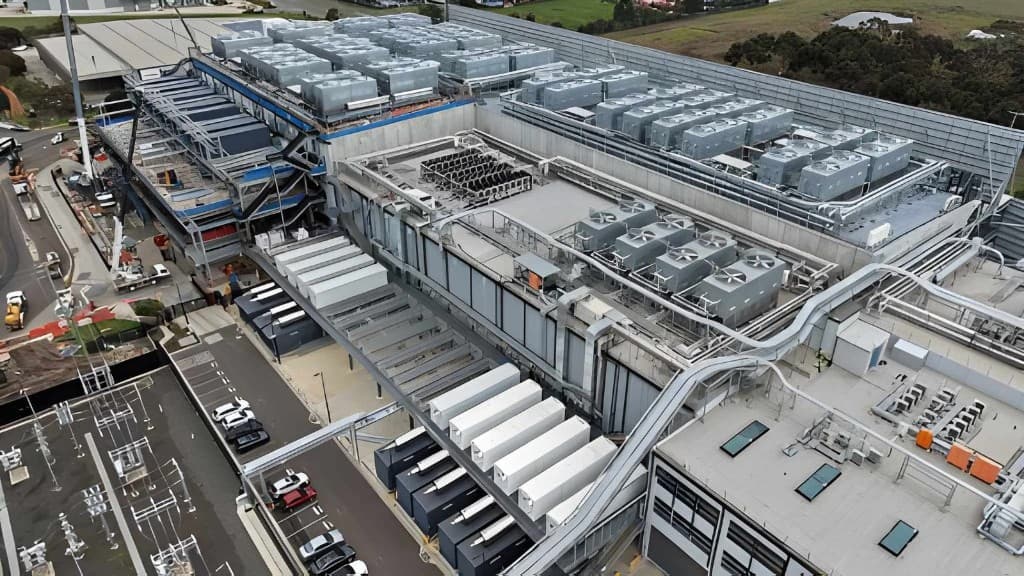
Modern data centres — particularly hyperscale and AI facilities — require enormous amounts of resilient infrastructure.
The servers may be the reason the facility exists, but those servers cannot operate without reliable supporting systems.
That can include:
- High-voltage and low-voltage electrical systems
- Transformers and switchgear
- UPS systems
- Emergency and standby generation
- Battery systems
- Cooling and chilled-water systems
- Pumps and mechanical equipment
- HVAC
- Building Management Systems (BMS)
- Electrical Power Monitoring Systems (EPMS)
- Fire detection and suppression
- Controls and instrumentation
- Security systems
- Fuel systems
- Water treatment
- Backup and redundancy systems
Every one of those systems has to be installed correctly.
Then it has to be inspected.
Tested.
Integrated.
Commissioned.
Demonstrated.
And ultimately handed over to operations.
That should sound very familiar to anyone who has worked on a major energy project.
Why Is the Market Growing?
Artificial intelligence is one of the major drivers.
The IEA reports that capital expenditure from five large technology companies exceeded $400 billion in 2025 and is expected to increase by another 75% in 2026.
But AI isn’t the only factor.
Cloud computing, digital services and continued growth in global data usage are all contributing to infrastructure demand.
Europe illustrates the scale of the development.
JLL reported that the five established FLAP-D markets — Frankfurt, London, Amsterdam, Paris and Dublin — had reached approximately 3.8 GW of live capacity by the first half of 2026, with another 1.4 GW under construction and 2 GW planned.
But growth isn’t limited to those traditional hubs.
Power availability, land availability and grid constraints are increasingly pushing large developments towards secondary locations. JLL expects more than half of Europe’s AI-related growth to occur in the Nordics and Tier 2 markets.
For professionals prepared to work internationally, the potential employment market is therefore becoming increasingly diverse.
Where Do Energy Professionals Fit?
This is where the crossover becomes interesting.
Someone may have spent 10, 15 or 20 years working in oil & gas without ever considering a data-centre role.
But employers aren’t necessarily looking for someone who understands servers.
They’re often looking for people who understand critical infrastructure.
Electrical
Energy-sector electrical professionals may already have experience with:
- HV/LV distribution
- Switchgear
- Transformers
- Protection systems
- Generators
- UPS systems
- Isolation and switching
- Electrical testing
- Energisation
- Fault finding
The equipment and standards may differ between sectors, but many of the underlying engineering principles remain highly relevant.
Mechanical
Mechanical professionals may bring experience with:
- Pumps
- Cooling systems
- Pipework
- Valves
- Pressure systems
- Rotating equipment
- HVAC
- Mechanical completion
- Equipment testing
- Maintenance
Cooling is particularly important because modern high-density computing infrastructure produces enormous quantities of heat.
Controls and Instrumentation
Instrumentation and controls professionals can potentially transfer experience involving:
- Control systems
- Sensors
- Monitoring
- Alarms
- Interlocks
- Cause-and-effect testing
- Functional testing
- System integration
The terminology may change — BMS and EPMS become particularly important — but the fundamental requirement remains:
Does the system operate and respond correctly under the required conditions?
Commissioning Could Be One of the Strongest Crossovers
Commissioning professionals should pay particular attention to this sector.
A major data centre cannot simply be constructed and switched on.
Systems must be progressively tested and verified, both individually and together.
That can involve:
- Pre-commissioning
- Component testing
- Functional testing
- Integrated Systems Testing
- Handover
- Operations
The precise commissioning methodology differs between companies and projects, but the underlying philosophy will be recognisable to experienced commissioning personnel.
Can the equipment perform its intended function?
What happens if something fails?
Does redundancy operate correctly?
Do alarms and controls respond as designed?
Will backup systems operate when required?
Can the facility continue operating safely during abnormal conditions?
For someone accustomed to commissioning safety-critical or production-critical systems, that mindset can be extremely valuable.
Completions Experience Matters Too
People from oil & gas often understand something that isn’t always obvious from a job title:
Commissioning starts long before somebody presses the start button.
Systems need to be defined.
Construction needs to be verified.
Documentation needs to be complete.
Punch items need to be controlled.
Testing needs to be recorded.
Turnover needs to be managed.
That makes experience in areas such as the following potentially relevant to mission-critical infrastructure projects:
- Systemisation
- Mechanical completion
- Punch management
- Inspection and test records
- Turnover documentation
- Preservation
- Handover
- Completion management systems
Again, candidates shouldn’t assume direct equivalence between sectors.
But the underlying project-delivery disciplines can be highly transferable.
QA/QC and HSE Don’t Disappear Either
Data-centre construction is still major construction.
Electrical installations need inspection.
Mechanical installations require verification.
Documentation and traceability matter.
Contractors need managing.
Work needs to be performed safely.
Quality professionals coming from energy projects can therefore bring experience in areas including inspection, ITPs, NCR management, documentation, welding, mechanical completion and turnover.
Likewise, experienced HSE personnel may bring knowledge of:
- Permit to Work
- Electrical safety
- LOTO
- Working at height
- Lifting operations
- Contractor management
- Construction safety
- Risk assessment
Sector-specific knowledge will still need to be developed, but the fundamental safety culture isn’t starting from zero.
Where Are the Opportunities Developing?
Europe’s traditional data-centre markets remain significant.
- London
- Frankfurt
- Amsterdam
- Paris
- Dublin
But the development map is widening.
According to JLL, AI-scale projects are increasingly being pushed towards locations where power and land are more readily available, including the Nordics and other secondary European markets.
CBRE similarly reports that many newly announced European schemes are expected outside the continent’s 15 largest metro markets, with access to electrical power becoming a major factor in site selection.
That’s an important development for energy professionals.
Because as data centres become larger and more power-intensive, the boundary between digital infrastructure and energy infrastructure becomes increasingly blurred.
The Skills Gap Works Both Ways
There is an important warning here.
Having worked in oil & gas does not automatically qualify someone for a senior data-centre position.
Candidates shouldn’t simply change the headline on their CV and assume their experience transfers directly.
They need to understand the gaps.
Depending on the role, that might mean learning more about:
- UPS
- BMS
- EPMS
- Data-centre redundancy
- Integrated Systems Testing
- Mission-critical terminology
- Specific electrical standards
- Data-centre commissioning processes
But neither should experienced energy professionals underestimate what they already know.
Project Skills That Still Matter
Someone who has spent years delivering complex projects may already understand:
- System boundaries
- Construction-to-commissioning handover
- Technical documentation
- Testing
- Troubleshooting
- Safety-critical work
- Contractor coordination
- Schedule pressure
- Client expectations
- Operational readiness
The challenge is demonstrating how they apply in a different environment.
Don’t Throw Away 20 Years of Experience — Translate It
For someone considering a sector move, this is perhaps the most important point.
You are not necessarily starting again.
You’re translating your experience.
Instead of simply writing:
Commissioning Engineer — Oil & Gas — 15 years
show what you’ve actually done.
For example:
- HV/LV systems
- Generators
- UPS
- Mechanical completion
- Systemisation
- Functional testing
- Cause & effect
- Energisation
- Handover
- Troubleshooting
Now a recruiter in another sector can begin to understand the crossover.
Your previous sector tells them where you’ve worked.
Your skills tell them what you can do.
The Opportunity Is Bigger Than Data Centres
There’s also a wider career lesson here.
The energy and infrastructure market is changing.
Oil & gas isn’t disappearing overnight.
Renewables continue developing.
Power demand is increasing.
Grid infrastructure needs investment.
Nuclear is receiving renewed attention.
And data centres are creating another major source of electricity and infrastructure demand.
The IEA expects global electricity demand to increase by 3.6% in 2026 and 3.8% in 2027, with expanding data-centre capacity among the structural drivers.
For experienced technical professionals, that means career planning should increasingly be based on skills rather than sector labels.
Look at Your Experience Differently
Energy Recruitment HUB is building Career Pathways across traditional and emerging energy sectors to help professionals understand exactly that.
If you’re considering moving from oil & gas, power or another major-project environment into data centres, don’t simply ask:
“Have I worked in a data centre before?”
Ask:
“Which of my skills transfer — and what am I missing?”
Use ERH Career Pathways and Career Intelligence to explore potential routes, understand role requirements and identify where your existing experience could take you.
And by creating an ERH profile and uploading your CV, you can make your experience searchable to recruiters looking for relevant technical talent.
Your next career move might not require starting again. It might require looking at your existing experience differently.