
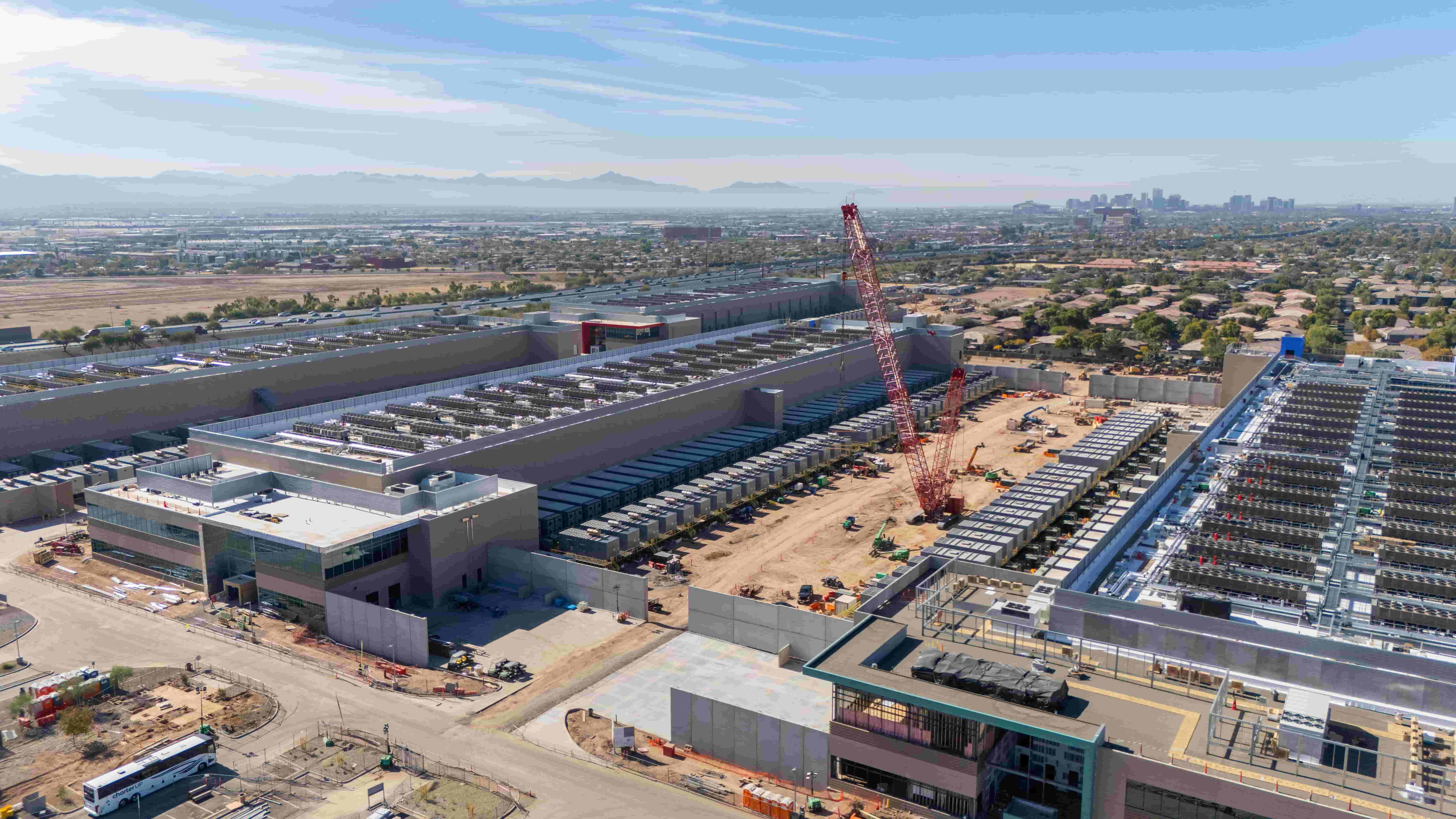
The Data Centre Boom Is Creating a New Market for Engineering and Construction Professionals
The global data centre industry is entering a period of major investment, driven by artificial intelligence, cloud computing and the increasing demand for digital infrastructure.
Across North America, Europe and other international markets, developers are announcing new facilities, expanding existing campuses and investing in the power infrastructure needed to support them.
But building a modern data centre involves considerably more than constructing a building and installing servers.
These facilities require high-voltage electrical infrastructure, cooling systems, mechanical installation, backup power, sophisticated controls, testing and commissioning.
For engineers, technicians and specialist contractors, particularly those with backgrounds in oil and gas, power generation and major industrial projects, this creates an increasingly attractive market.
As we approach 2027, the question isn’t simply where new data centres will be built. It’s which projects are progressing towards construction, which companies are involved and where the next opportunities could emerge.
1. Why Data Centre Construction Is Expanding
Artificial intelligence and high-performance computing require substantial computing capacity, reliable electricity supplies and increasingly advanced cooling systems.
This is encouraging investment in facilities that are significantly larger and more technically complex than many traditional data centres.
According to the European Data Centre Association’s 2026 industry report, hyperscale data centre construction and installation investment across Europe is forecast to reach approximately €7.7 billion in 2027, compared with €7 billion in 2026.
This is a forecast for a defined segment of the European market, rather than a measure of all global data centre spending.
However, it highlights the scale of construction activity being anticipated.
A major challenge for developers is now securing enough electrical power, suitable sites, equipment and specialist engineering capacity to deliver their projects.
For the wider supply chain, those challenges can create opportunities.
2. Major Data Centre Developments to Watch in 2027
Several recently announced projects illustrate how data centre investment is translating into construction programmes, supply chain activity and potential workforce requirements.
Drax AI Data Centre – United Kingdom
- Location: North Yorkshire, UK
- Development partners: Drax, Brookfield and Radiant
- Potential investment: More than £20 billion across the wider proposed development
- Initial phase: Up to 100 MW
- Target: Initial operations from Q1 2028, subject to approvals and commercial decisions
In November 2026, Drax announced a strategic partnership with Brookfield and Radiant to develop major AI data centre capacity at its existing power station site in North Yorkshire.
The initial development could involve up to £2.5 billion of investment, with a first phase targeting commercial operations in early 2028.
The attraction of the location is its existing power infrastructure, including significant grid access.
However, the initial phase remains subject to planning, regulatory and network approvals, securing a suitable tenant and a final investment decision.
Why it matters for engineering professionals: if the development progresses, the lead-up to operations could create requirements across electrical distribution, power integration, mechanical systems, cooling, construction and commissioning.
For engineers in Northern England, it is a particularly interesting development to monitor during 2027.
These are potential future requirements, not confirmed vacancies or awarded construction packages.
Project Jupiter – United States
- Location: New Mexico, USA
- Major technology customer: Oracle
- Current activity: Major campus construction and workforce development
- 2027 milestone: Planned expansion of long-term operational hiring and technician training
Project Jupiter provides a useful example of how major data centre developments create opportunities beyond the core technology industry.
In October 2026, Oracle reported that more than $994 million in contracts had been awarded to 30 New Mexico businesses.
These covered disciplines including HVAC, insulation, plumbing, electrical services, sanitation and equipment rental.
Oracle also reported that 4,393 workers had contributed to construction activities, completing more than 3.75 million labour hours.
These are reported cumulative participation figures, not a count of currently available jobs.
Looking towards 2027, Oracle has also announced plans to begin increasing long-term operational recruitment and launch its paid, 12-week Catalyst Data Center Technician training programme.
Why it matters: this is a real-world example of the opportunities created throughout the supply chain. The project demonstrates demand for construction trades, specialist subcontractors, equipment suppliers and technical support services.
It also illustrates how opportunities can change as projects move from construction towards operational readiness.
Point Tupper Data Centre – Canada
- Location: Nova Scotia, Canada
- Developer: EverWind
- Proposed investment: More than $10 billion across the data centre and associated wind portfolio
- Workforce projections: Approximately 2,000 construction positions and 215 permanent operating positions across the combined developments
In October 2026, EverWind announced plans for a major data centre campus at Point Tupper alongside new renewable power developments across Nova Scotia.
The proposed investment includes more than $8 billion for the data centre campus and approximately $2 billion for an associated wind portfolio.
Importantly, the headline workforce figures relate to the combined programme, rather than the data centre alone.
Why it matters: developments combining digital infrastructure with energy generation may create opportunities across several technical disciplines.
Potential requirements include power engineering, civil construction, mechanical installation, electrical infrastructure, controls and commissioning.
For companies already active in energy construction, the connection between data centres and power generation is particularly relevant.
The project is at a proposed development stage, so future contracting and recruitment activity will depend on project progression.
atNorth FIN05 – Finland
- Location: Salo, Finland
- Developer: atNorth
- Planned investment: Approximately €2 billion
- Initial planned capacity: 75 MW, with a potential expansion pathway to 230 MW
In October 2026, atNorth announced plans for a new high-density data centre development in Salo, Finland.
The project includes a substantial site and a planned connection through a Fingrid substation.
Power for the initial 75 MW phase has been secured, according to the developer.
Why it matters: the Nordic region continues to attract interest in data centre developments because of its power infrastructure, climate and digital connectivity.
Facilities of this scale can create potential requirements for high-voltage systems, mechanical cooling, electrical installation, building automation and commissioning.
The next developments to watch are planning, contractor appointments, construction schedules and procurement announcements.
No specific 2027 construction-start date has been confirmed in the project information referenced here.
3. Where Will the Engineering Opportunities Come From?
Large data centres require significant engineering support, and many of the most important roles are associated with power, cooling and reliability.
Electrical engineering and high-voltage systems: modern data centres rely on highly resilient electrical networks. This can include substations, transformers, switchgear, UPS systems, backup generation, protection systems and complex distribution infrastructure.
Potential electrical roles include:
- HV electrical engineers and technicians
- Electrical construction managers
- Protection and control engineers
- Electrical testing and commissioning engineers
- Authorised persons and switching specialists
For professionals experienced in major industrial facilities, much of this equipment and associated safety management will already be familiar.
Mechanical engineering and cooling systems: cooling is one of the most important engineering challenges associated with high-density computing. Data centres may use chilled-water systems, air-cooling equipment, liquid cooling and heat-rejection systems, depending on the facility design.
Potential opportunities include mechanical engineers, pipefitters, HVAC technicians, commissioning specialists, mechanical supervisors and controls engineers.
Experience in industrial cooling, fluid systems, pumping arrangements and mechanical installation can be valuable when moving into this sector.
Commissioning and technical handover: data centres must demonstrate that their critical systems operate reliably before facilities are handed over for service. This requires structured testing and verification of electrical, mechanical, controls and safety systems.
Commissioning activities can include equipment testing, functional performance verification, failure-mode testing, integrated systems testing and documentation.
Experienced commissioning professionals are familiar with many of the same principles used in oil and gas, power generation and process facilities.
However, data centres also require specific knowledge of critical power resilience, redundancy, cooling performance and operational continuity.
The transferable experience is valuable, but understanding data centre-specific systems and testing expectations is essential.
4. Can Oil and Gas Engineers Move Into Data Centre Construction?
For many engineering professionals, the transition is realistic.
Oil and gas projects and data centres share several important characteristics.
Both rely on detailed engineering, specialist equipment, construction management, quality assurance, safety procedures and structured completion processes.
An electrical technician who has worked on offshore installations may already understand switchgear, cable testing, isolation procedures and equipment verification.
A mechanical completion engineer may have extensive experience managing system boundaries, punch lists, turnover packages and commissioning readiness.
An instrumentation engineer may be familiar with automation, alarms, control systems and functional testing.
These skills can provide a strong foundation.
However, candidates should avoid assuming that experience in one sector automatically qualifies them for every data centre role.
Additional knowledge may be needed in areas such as UPS technology, data centre cooling, integrated systems testing, redundancy strategies and mission-critical operations.
Professionals who identify those gaps and develop the relevant knowledge will be better positioned when opportunities arise.
5. The Supply Chain: Who Actually Benefits From These Projects?
A major data centre announcement often focuses on the technology company or infrastructure developer.
But the work itself can be spread across a substantial network of engineering contractors and specialist suppliers.
A typical delivery structure may include:
- Developer or Data Centre Operator
- Responsible for project development, investment decisions and the intended facility requirements.
- Main Construction or Engineering Contractor
- Responsible for managing major construction and installation packages, depending on the contracting model.
- Specialist Subcontractors
- Delivering electrical installation, HVAC, mechanical systems, structural works, controls and commissioning services.
- Equipment Manufacturers and Suppliers
- Providing electrical equipment, cooling systems, pumps, piping, switchgear, generators and specialist components.
- Recruitment and Workforce Partners
- Supporting the companies responsible for construction, testing and operational mobilisation.
For specialist contractors, this creates an important distinction.
The company announcing the project may not be the company that eventually purchases your services.
Understanding who has been appointed, which work packages have been awarded and what remains to be procured can be considerably more useful than knowing the overall investment figure.
6. Why 2027 Will Be an Important Year to Monitor
Not every project announced in 2026 will begin construction or become operational in 2027.
Some will remain in planning, some will progress to procurement and others will move towards installation or commissioning.
That makes project milestones particularly important.
For construction companies, an EPC or main contractor appointment could indicate potential future subcontracting activity.
For equipment suppliers, a detailed design or procurement milestone may identify an opportunity to investigate.
For recruiters, confirmed contractor mobilisation or a planned operational handover could provide an indication of upcoming workforce requirements.
For individual engineers, understanding when projects move towards mechanical completion and commissioning can help them prepare for the next stage of work.
But there is an important difference between a project milestone and a vacancy.
An investment announcement is not a job advertisement, and an upcoming construction phase doesn’t guarantee that contractors are recruiting.
7. How Project Intelligence Can Help Identify Opportunities
The challenge for the energy and construction workforce is that useful project information is often spread across different sources.
Developers publish investment announcements. Engineering contractors announce major awards. Specialist suppliers report equipment orders. Local authorities publish planning decisions. Recruitment requirements may appear later through contractors, labour providers or official careers websites.
Individually, each announcement provides part of the picture. Together, they can help professionals and businesses understand where a project is heading.
At Energy Recruitment Hub, our developing Project Intelligence capabilities are designed to help bring this information together.
Our focus is on three practical questions:
- What happened?
- Identify the verified development, the companies involved, the location, the scope and any significant figures.
- Why does it matter?
- Explain what the development could mean for engineering professionals, recruiters, suppliers and contractors.
- What’s the next move?
- Highlight practical actions, such as following a newly appointed contractor, monitoring procurement activity, identifying relevant skills or reviewing verified recruitment information.
The aim is to move beyond general project news and provide a clearer understanding of where opportunities may develop.
8. What Should Engineers and Contractors Be Doing Now?
For professionals considering the data centre sector, waiting until vacancies appear may mean missing valuable preparation time.
Start by identifying which of your existing skills are transferable.
Review the technical requirements of data centre electrical, mechanical and commissioning roles.
Follow the companies involved in actual construction and equipment delivery, not just the major technology brands.
For contractors and suppliers, monitor developments early enough to understand future procurement and registration requirements.
And for recruiters, pay attention to who is actually responsible for delivering the work.
The next opportunity may not come from the company announcing the project. It may come from the specialist contractor appointed to deliver part of it.
Conclusion: Data Centres Are Becoming a Major Engineering Market
The expansion of AI, cloud computing and digital infrastructure is creating a significant new market for engineering and construction professionals.
Data centres increasingly depend on the same technical disciplines that support major energy and industrial developments.
Electrical engineering, mechanical systems, cooling infrastructure, automation, construction management and commissioning will remain central to their delivery.
For experienced oil and gas professionals, there are opportunities to transfer relevant skills into this growing industry.
For contractors and recruiters, the challenge is identifying which projects are progressing, who is delivering the work and when requirements could emerge.
The real advantage in 2027 won’t simply be knowing where the next data centre is planned. It will be understanding which projects are moving forward, who’s delivering them and where the next opportunities could emerge.
Project figures, investment values and workforce projections are based on publicly announced information available in November 2026. Future developments remain subject to individual project schedules, approvals and commercial decisions. Potential workforce demand should not be interpreted as confirmed vacancies.