The Predictions Don’t Match the Full Picture
For years, energy professionals have heard the same predictions.
Oil and gas is declining.
The energy transition will reduce opportunities.
Experienced workers should start looking elsewhere.
But as we move towards 2027, the reality is considerably more complicated.
Global investment is changing, but major oil, gas and LNG developments are still progressing around the world. At the same time, the types of skills projects require — and where those skills are needed — are evolving.
For professionals working in construction, commissioning, completions, operations, maintenance, engineering and project delivery, the question isn’t simply: “Is oil and gas growing or declining?”
A much more useful question is: “Where is investment going, which projects are moving forward, and where could that create future demand for experienced people?”
Oil Investment Is Under Pressure — Gas Is Moving Differently
There is no point pretending every part of the traditional energy market is expanding.
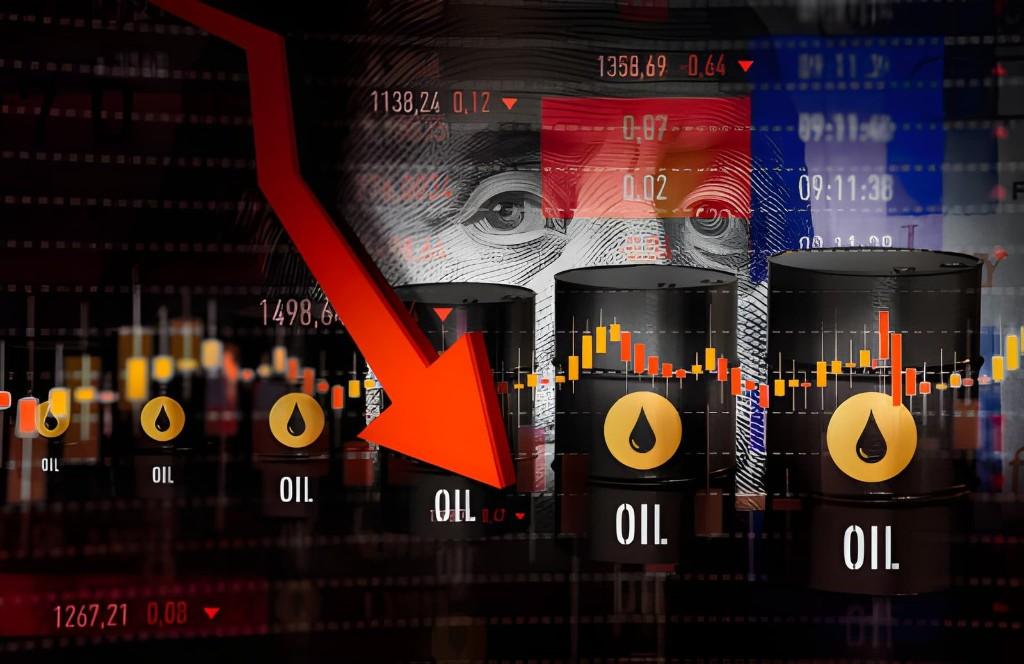
The International Energy Agency expects global oil investment to fall for a third consecutive year in 2026, dropping below $500 billion.
Natural gas tells a different story.
The IEA expects gas investment to reach approximately $330 billion in 2026 — its highest level in a decade — supported partly by new LNG export developments.
That distinction matters.
Talking about “oil and gas” as though it is one single market can hide significant differences between upstream oil, natural gas, LNG, brownfield modifications, pipelines and processing infrastructure.
And for the workforce, those differences matter even more.
LNG Is Entering a Major Development Cycle
One of the clearest areas of project activity is LNG.
According to the IEA’s Global LNG Capacity Tracker, approximately 345 billion cubic metres per year of new LNG export capacity from projects already at FID and under construction is scheduled to come online globally between 2025 and 2030.
The IEA describes it as the largest wave of LNG capacity additions to date.
Investment decisions are continuing too.
More than 100 bcm per year of LNG capacity reached final investment decision during 2025, and another three US developments — CP2 LNG Phase 2, Commonwealth LNG and Delfin FLNG 1 — reached FID by early June 2026.
Projects are spread across countries including:
- United States
- Qatar
- Canada
- Mozambique
- Nigeria
- Australia
- Indonesia
- Malaysia
- Mexico
- Oman
- UAE
But there is an important qualification.
Projects can be delayed.
Construction schedules change.
Geopolitical events affect supply chains.
And a project reaching FID does not mean every discipline immediately enters a recruitment cycle.
That’s why professionals need to understand the project lifecycle rather than simply watching headlines.
From FID to First Gas: Where People Enter the Project
A major energy project typically moves through several distinct stages:
- FEED
- FID
- Detailed Engineering
- Procurement
- Fabrication
- Construction
- Mechanical Completion
- Completions
- Commissioning
- Start-up
- Operations
Each stage requires a different workforce.
During engineering and procurement, demand may centre on engineering, project controls, procurement and specialist technical functions.
What Construction Acceleration Looks Like for Recruitment
As fabrication and construction accelerate, requirements broaden into areas such as:
- Construction management
- Mechanical
- Piping
- Electrical
- Instrumentation
- QA/QC
- Welding and inspection
- HSE
The Shift From Construction to Commissioning
Then comes a stage particularly relevant to many experienced energy professionals.
As systems approach mechanical completion, the workforce requirement changes again.
Projects increasingly need people capable of taking equipment and systems from construction through verification, testing and safe operation.
That can create requirements across:
- Completions
- Commissioning
- Electrical commissioning
- Instrument commissioning
- Mechanical commissioning
- Preservation
- Systemisation
- Punch management
- QA/QC
- Permit to Work and isolation
- Start-up and operations readiness
This is why following the project phase can be more valuable than simply knowing the project’s name.
A commissioning professional may see little opportunity on a project during early construction but become highly relevant as systems begin moving towards handover.
North America Remains Important
The United States is playing a particularly significant role in the current LNG investment cycle.
In 2025 alone, more than 80 bcm per year of US LNG liquefaction capacity reached FID, according to the IEA.
Projects included Louisiana LNG, Corpus Christi Trains 8 and 9, CP2 Phase 1, Rio Grande LNG Train 4 and Port Arthur Phase 2.
Further US projects have subsequently reached FID in 2026.
That creates more than just work at LNG terminals.
Major developments can generate activity throughout the supply chain:
- Engineering
- Fabrication
- Construction
- Pipelines
- Utilities
- Commissioning
- Operations
The recruitment picture therefore extends considerably beyond the headline project itself.
The Middle East Remains Significant — But With Uncertainty
The Middle East continues to contain some of the world’s largest oil and gas developments.
Saudi Arabia, for example, continues developing the enormous Jafurah gas field, while Saudi Aramco is reorganising its business to create a dedicated gas division as it expands its domestic and international natural-gas activities.
Qatar’s North Field expansion is another huge development.
However, events during 2026 demonstrate exactly why project intelligence needs to be current.
QatarEnergy said this month that the first North Field East LNG train remained targeted for production in early 2027, but subsequent phases faced uncertainty following disruption to equipment deliveries and damage to infrastructure at Ras Laffan.
So professionals shouldn’t treat a project schedule published 12 months ago as fixed.
Follow the project, not just the original announcement.
Africa Could Become Increasingly Important
Africa is another region worth watching.
New LNG capacity is progressing in countries including Mozambique, Nigeria, Congo, Gabon and Senegal.
As these developments progress through construction and towards commissioning and operations, they can potentially create demand for both local and international expertise.
That doesn’t mean every project will produce a huge expatriate recruitment drive.
Local-content requirements, contracting strategies and national workforce development all affect how projects recruit.
But experienced professionals with major-project backgrounds should have Africa on their radar.
Experienced People Still Matter
Technology changes.
Markets change.
Energy policy changes.
But complex facilities still have to be constructed, tested, commissioned, operated and maintained safely.
And that requires experience.
Someone has to understand:
- How do we know the system is mechanically complete?
- Has it been tested correctly?
- Are the isolations correct?
- Have the punch items been assessed?
- Does the equipment perform as designed?
- Is the system safe to introduce hydrocarbons into?
Those responsibilities cannot simply be reduced to a job title.
They require technical knowledge, judgement and experience developed through delivering real projects.
But Don’t Assume Your Previous Career Will Automatically Continue
This is where experienced professionals need to be careful.
Twenty years in oil and gas does not automatically guarantee another ten years of identical opportunities.
The geographical centres of investment can change.
Contracting models change.
Technology changes.
Projects increasingly compete for skills with LNG, power, offshore wind, nuclear and data centres.
The strongest strategy isn’t necessarily to abandon oil and gas.
It’s to understand which parts of your experience have value beyond it.
A commissioning engineer may understand systemisation and handover.
An electrical technician may have experience with HV/LV systems, protection and switching.
An instrument technician may understand controls, testing and fault-finding.
A mechanical professional may have extensive experience with rotating equipment, pressure systems and utilities.
A QA/QC professional may understand inspection, documentation, traceability and turnover.
Those capabilities can potentially transfer into several adjacent sectors.
So, Is Oil & Gas Declining?
In some areas, investment is clearly under pressure.
In others — particularly natural gas and LNG — substantial capital continues to be committed.
The more important takeaway for energy professionals is that the market isn’t disappearing. It’s changing.
And that means career planning needs to change with it.
Don’t simply wait for another version of your previous job to appear.
Follow major projects.
Understand their timelines.
Identify where your discipline enters the project lifecycle.
Keep your CV current.
And understand which of your skills can transfer into adjacent energy and infrastructure sectors.
Because the next major recruitment cycle may not look exactly like the last one.
Your Experience Still Has Value
Energy Recruitment HUB is building a global community connecting energy professionals, recruiters and opportunities across traditional and emerging energy markets.
Create your profile and upload your CV so your experience can be discovered by recruiters searching for relevant energy talent.
You can also use ERH Career Pathways and Career Intelligence to explore where your current experience could take you next — whether that’s within oil and gas or into LNG, power, renewables, data centres and other major-project sectors.
Your experience still has value. The important question is where that experience will be needed next.